
The rapid evolution of consumer devices cloud infrastructure and artificial intelligence is fundamentally reshaping how people and enterprises interact with modern technology. Recent industry breakthroughs highlight a pivotal shift from standalone cloud services toward hybrid intelligence networks and fully autonomous agentic systems. Simultaneously mobile device manufacturers are pushing the boundaries of silicon architecture display physics and hardware enforced privacy to meet the demands of an increasingly connected digital ecosystem.
The Strategic Shift Toward On Device Processing and Enterprise Agentic Workflows
As artificial intelligence matures from simple prompt driven chat interfaces into complex semi autonomous digital assistants the underlying infrastructure powering these models is undergoing an unprecedented architectural shift. Modern enterprise environments now demand systems that execute multi step logic make contextual decisions and safeguard sensitive data without relying exclusively on remote server clusters.
Architecting Hybrid Execution Models Across Edge and Cloud Infrastructure
- Dynamic Workload Allocation: Enterprise architectures now utilize dynamic load balancing that partitions neural network layers between local neural processing units (NPUs) and high throughput cloud clusters based on latency requirements energy budgets and sensitive data boundaries.
- Autonomous Software Engineering Engines: Advanced developer environments including Anthropic Claude Code OpenAI Codex and deeply integrated GitHub Copilot platforms have expanded beyond auto complete to perform automated unit testing static code analysis continuous integration patching and multi file code refactoring.
- Agent Governance Frameworks and Security Sandboxing: To prevent unintended systemic actions platform engineers are deploying zero trust isolation boundaries transactional rollbacks and contextual scope limitations around autonomous agentic workflows.
High Density Silicon and Semantic Data Layer Innovations
- Custom Enterprise Inference Accelerators: Tech infrastructure providers are deploying custom built silicon solutions such as Microsoft Maia and Nvidia Blackwell server chips to handle massive matrix multiplication workloads at significantly lower cost per token profiles.
- Unified Semantic Layers and Knowledge Graphs: Disjointed corporate databases are increasingly unified through semantic indexing layers and structured graph databases enabling AI agents to query proprietary enterprise data while retaining exact relational context.
- Edge Computing and Reduced Latency Pipeline Optimization: By deploying quantized micro models directly on edge hardware organizations are achieving near zero latency for critical operations such as real-time language translation and industrial telemetry monitoring.
Hardware Engineering Milestones Across Flagship Mobiles, Foldables, and Display Physics

Mobile hardware development is experiencing a major resurgence driven by breakthroughs in dynamic display physics structural material science and integrated micro hardware security features.
Advanced Display Privacy and Ergonomic Hardware Redesigns
- Directional Light Filtering and Hardware Privacy Displays: Next generation flagship smartphones exemplified by emerging releases like the Samsung Galaxy S26 Ultra integrate hardware level privacy display technology that manipulates micro prism light angles to render screens unreadable from side angles without degrading direct viewer clarity.
- Refined Ergonomics and Advanced Thermal Management: Modern device chassis are shifting away from sharp geometric angles toward contoured highly ergonomic form factors crafted from lightweight titanium alloys and heat dissipating vapor chamber assemblies.
- On Device Micro NPU Integration: System on Chip (SoC) architectures now designate significant die area to specialized micro NPUs allowing real time computational photography continuous speech processing and localized privacy filtering directly on the device.
Architectural Advances in Foldable Devices and Accessible Mobile Platforms
- Multi Screen Ergonomics and Hinge Durability: The foldable landscape spanning models like the Google Pixel 10 Pro Fold and advanced multi fold concepts is benefiting from fluid liquid metal hinges flexible thin-glass layers and robust IP rated ingress protection against dust and moisture.
- Democratization of On Device Intelligence in Mid Range Devices: High tier AI functionality is quickly filtering down to accessible price tiers. Devices like the Google Pixel 10a leverage optimized power efficient chipsets to deliver flagship grade image processing live call screening and ambient intelligence at accessible consumer price points.
- Display Energy Efficiency and Variable Refresh Technologies: Next generation OLED panels utilize ultra low frequency refresh scaling (down to 1Hz) coupled with tandem emitter layers to significantly reduce power consumption during ambient display states.
Digital Provenance Cryptographic Watermarking and Cyber Defense Frameworks
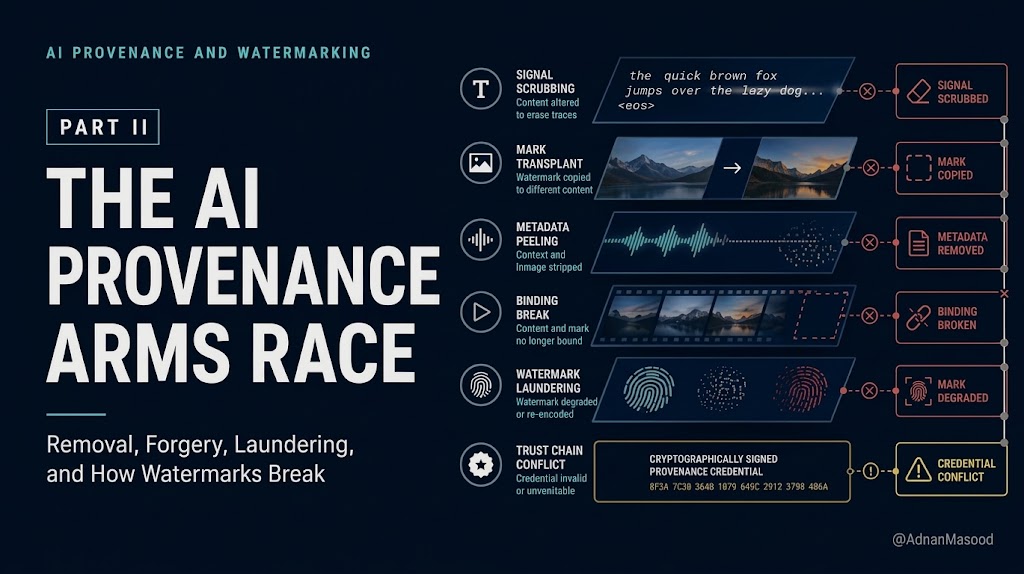
The widespread dissemination of synthetic media and multi modal generative content has elevated digital provenance from an emerging technical field into a cornerstone of global cybersecurity policy and content validation.
Cryptographic Watermarking Standards and Synthetic Media Verification
- Integrated Content Provenance Protocols: Digital publishers broadcast networks and streaming media platforms are increasingly standardizing on Coalition for Content Provenance and Authenticity (C2PA) framework specifications alongside imperceptible watermarking solutions like Google SynthID.
- Automated Audio and Video Verification Engines: Media networks and streaming platforms (including services like Deezer) deploy real time audio fingerprinting and spectral analysis to detect synthetic audio generation protect artist copyright and filter deepfake voice clones.
- Digital Footprint Tracking and Immutable Metadata: Photographers and creators are gaining access to hardware signed image capturing technologies that attach immutable cryptographic signatures directly at the camera sensor level.
Next Generation Zero Trust Architectures and Wearable Ecosystems
- Passkey Adoption and Biometric Authentication: Cybersecurity protocols are transitioning away from legacy multi factor text mechanisms toward hardware-bound cryptographic passkeys ocular iris scanning and decentralized identity credentials.
- Miniaturization of Optical Glass and Spatial Computing: Advances in flat lens optics metalenses and micro OLED projection engines are accelerating the miniaturization of spatial computing hardware yielding lightweight smart glasses capable of seamless augmented reality overlays.
- Resilient Infrastructure and System Patching: Enterprise operating systems and software ecosystems continue to enforce aggressive patch cadences addressing widespread zero day vulnerabilities across core libraries cloud service instances and cross platform runtime environments to prevent supply chain compromises.