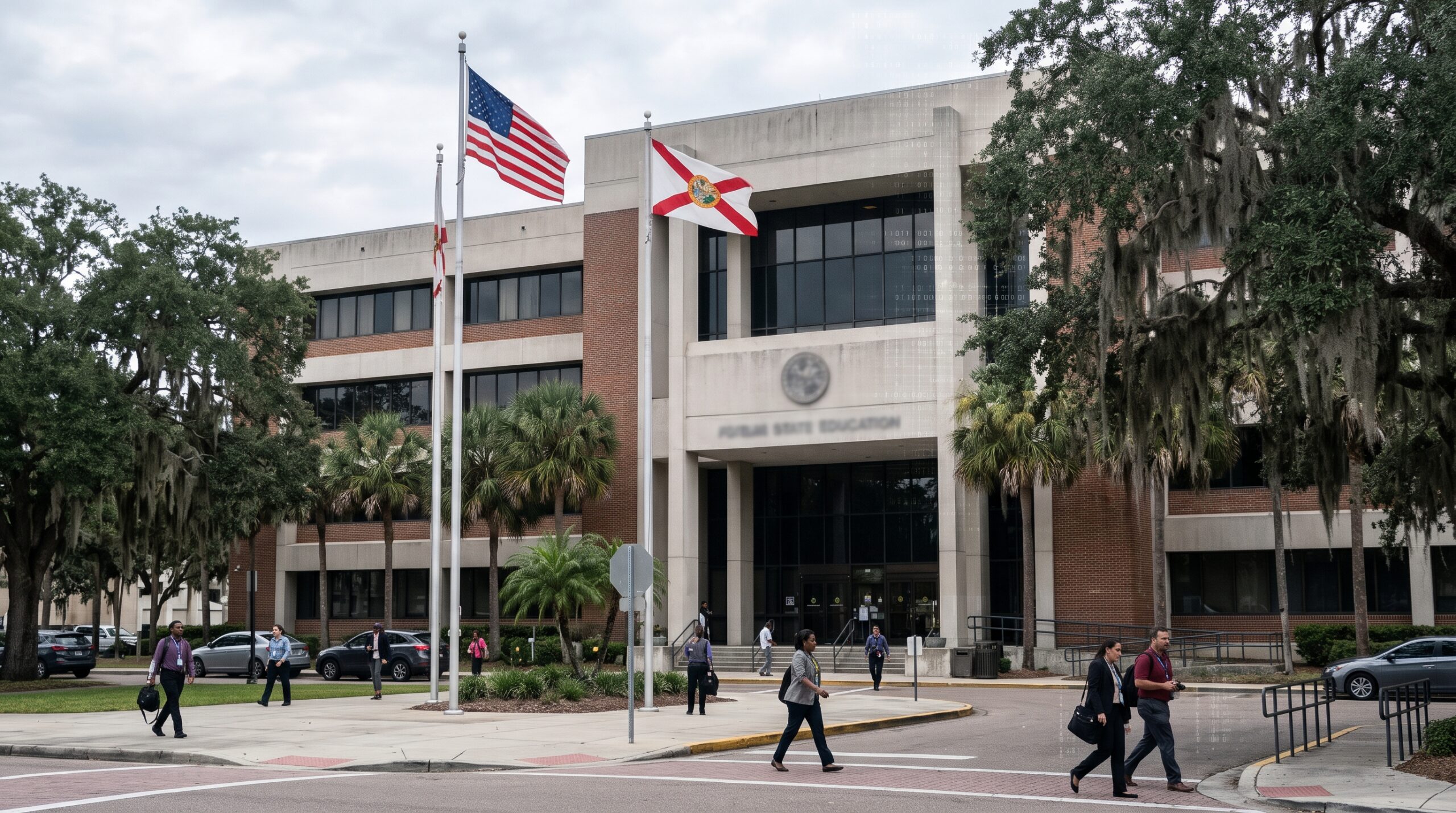
Tallahassee, Florida — November 4, 2026
A data breach involving Florida’s student financial aid website may have put the personal information of approximately 4.9 million people at risk, according to the Florida Department of Education. The department says the incident involved unauthorized criminal access and may have exposed sensitive details, including Social Security numbers, dates of birth and home addresses.
The Florida financial aid breach was discovered on October 19, with the department publicly announcing the incident on October 29. State officials say they activated cybersecurity response procedures and are working with law enforcement and Florida’s digital services agency. The investigation remains ongoing, and authorities have not publicly established who was responsible or precisely which records were accessed.
The department has also sought to reassure students that the incident is not expected to interrupt current financial aid payments, tuition disbursements, scholarships, grants or student-loan eligibility. However, the potential exposure of identity-related information presents a separate risk that could persist beyond the immediate incident response.
What Happened at Florida’s Student Financial Aid Website?
The Florida financial aid breach came to light after department staff identified unauthorized criminal access to the state’s financial aid website on October 19, 2026. The department subsequently published a public announcement dated October 29, confirming that it was responding to a data breach.
Officials said the incident appeared to be limited to the Florida Student Financial Aid website, which supports access to state financial aid information and programs. The department warned that some websites and online services could experience temporary disruptions while its teams worked to secure systems and restore functionality.
The department estimated that approximately 4.9 million individuals may have been affected. That figure is a potential impact estimate, not confirmation that the records of every person in the total were accessed, copied or misused.
The distinction matters. During an active investigation, an organization may identify a database or system that contains information associated with millions of people before it can establish the precise number of individuals whose records were exposed. Florida officials have cautioned that not everyone was necessarily affected and that the categories of information involved may differ from person to person.
The Florida financial aid breach is therefore significant both because of its potential scale and because several types of sensitive personal information may be involved.
What Personal Information May Have Been Exposed?

The department’s public breach information lists several categories of potentially affected data:
- First and last names
- Social Security numbers
- Dates of birth
- Home addresses
- Phone numbers, including mobile numbers
- Email addresses
- Gender identification codes
The potential impact of the Florida financial aid breach extends beyond ordinary contact information. The department’s public breach information lists several categories of potentially affected personal data, including Social Security numbers, dates of birth and home addresses.
Email addresses and phone numbers can also be used to tailor phishing messages. For example, a fraudster might pose as a financial aid office, a college administrator, a government agency or a financial institution and claim that the recipient must confirm personal details to protect an application or payment.
That scenario is a potential consequence of the exposed data, not evidence that such a campaign has already been linked to this incident. No confirmed misuse of the information should be inferred solely from the department’s breach announcement.
It is also not yet clear from the public information how many records contained each listed data type, whether all categories were present in the same records, or whether investigators have confirmed that the information was removed from the affected system by an unauthorized party.
Those details will be important for determining the eventual scope of the Florida financial aid breach and the level of protection that affected individuals may need.
Who Could Be Affected?
The Florida financial aid breach could concern people who applied for assistance through the state’s website in previous years, as well as current students. The department says that people who previously applied for financial aid in Florida may be among those affected, but it has not published a verified list of individuals whose records were exposed.
Because the department has not published a verified list of affected individuals in the information reviewed for this report, past use of the website should be treated as a reason for caution rather than proof that a specific person’s records were exposed.
Former applicants and current students should follow official updates from the Florida Department of Education. Anyone who is unsure whether their information may be involved can contact the department through its published breach-response email address, databreach@fldoe.org.
People should be cautious about unsolicited messages claiming to provide breach notifications or compensation. Criminals sometimes exploit high-profile incidents by impersonating the affected organization or offering fake services to people worried about their personal information.
A message asking for a Social Security number, account password, payment or verification code should not be trusted simply because it mentions the Florida financial aid breach. Use independently verified contact information rather than links or phone numbers supplied in an unexpected message.
State Officials Are Investigating the Incident
The Florida Department of Education says it activated its cybersecurity response protocols after identifying the threat. It has also said it is working with the Florida Digital Service and the Florida Department of Law Enforcement.
The department confirmed that the incident was reported to the Office of the Attorney General in accordance with Florida’s breach-notification requirements. Its public statement described the matter as an ongoing criminal investigation and said additional information would be provided as details are verified.
The department has not publicly identified an attacker or disclosed a confirmed method of entry in the materials reviewed for this report. There is also no verified basis here to classify the incident as ransomware, attribute it to a named hacking group, or claim that the data has been offered for sale.
Investigators will need to establish how unauthorized access occurred, what systems and records were involved, and whether the attacker obtained or retained data. The answers may depend on forensic analysis of system logs, access records, affected databases and other evidence.
The website’s temporary disruption is consistent with an organization taking systems offline or restricting access during incident response, but downtime alone does not establish how an intrusion occurred or whether every security issue has been resolved.
Will Financial Aid Payments or Scholarships Be Affected?
The department has said that current financial aid is not at risk and that the Florida financial aid breach will not delay financial aid disbursements or tuition payments handled by the department. It also says the incident will not affect eligibility for its scholarships, grants or student loans. These assurances address the operation of financial aid programs, although the investigation into the potential exposure of personal information remains ongoing.
That assurance addresses the immediate operation of financial aid programs. It does not mean that the personal information potentially involved in the Florida financial aid breach carries no risk.
Payment systems and identity records serve different purposes. A breach involving personal data may create opportunities for fraud even when the systems that authorize or distribute financial assistance continue operating normally.
Students should therefore distinguish between the status of their financial assistance and the security of their personal information. They should continue using official channels to manage their aid and should not assume that a message about a delayed payment is genuine.
If a suspicious message arrives, students should verify it through a trusted institutional website or an established contact method. They should not provide login credentials, payment details or one-time authentication codes in response to an unsolicited request.
What Should Potentially Affected People Do Now?
The department recommends monitoring financial and online accounts, reviewing statements and credit reports, and considering a fraud alert or credit freeze. These precautions can help people detect suspicious activity and reduce the chance that exposed information will be used to open new credit accounts.
1. Review credit reports. Check reports for unfamiliar accounts, credit inquiries or other activity that cannot be explained. In the United States, AnnualCreditReport.com is the federally authorized website for requesting free credit reports from the major credit-reporting companies.
2. Consider a credit freeze. A freeze restricts access to a credit report and can make it harder for someone to open a new credit account in the person’s name. It is free to place and lift. People who choose this option generally need to contact Equifax, Experian and TransUnion separately.
3. Monitor financial accounts. Review bank and card statements, account alerts and online activity. Contact the relevant financial institution promptly if an unfamiliar transaction or account appears.
4. Be alert to phishing. Treat unexpected messages about scholarships, student loans, account verification or breach compensation with caution. Avoid opening suspicious attachments, and do not share passwords or verification codes.
5. Secure important accounts. Use unique passwords for important accounts and enable multifactor authentication where available. If a password may have been reused or exposed, change it on the affected service and on other accounts that used the same password.
6. Use official identity-theft guidance. The Federal Trade Commission provides advice for people whose information may have been exposed in a data breach. If someone discovers that their identity has actually been misused, IdentityTheft.gov provides recovery steps.
These measures cannot reverse a data exposure, but they can help reduce the likelihood that exposed information will be used successfully. People should keep records of suspicious communications and any steps taken to report suspected fraud.
Questions That Still Need Answers
Several important questions about the Florida financial aid breach remain unresolved. The department has not publicly established the exact number of people whose information was confirmed exposed, which records were accessed, or whether any data has been misused. The initial estimate of 4.9 million individuals should not be treated as a final, independently verified victim count.
The method of intrusion also remains unclear in the public information reviewed for this report. Without a confirmed explanation of the entry point, it would be premature to attribute the incident to a software vulnerability, compromised credentials, an insider or a particular malware family.
Further updates may clarify whether the affected service has been fully restored, what remedial changes have been made and whether individuals will receive direct notifications. Until then, people who may have used the website should rely on official communications and take proportionate precautions.
For the department, the response will involve more than restoring online services. It will also need to establish the incident’s scope, protect affected systems, communicate verified findings and explain what steps people should take as the investigation progresses.
Conclusion
The Florida financial aid breach has raised serious concerns about the security of sensitive information held by a public education agency. The state’s estimate that approximately 4.9 million individuals may have been affected makes the incident potentially far-reaching, but the final scope and any confirmed misuse of records remain unknown.
Florida officials say financial aid payments, scholarships, grants and eligibility will not be disrupted. People who may have used the state’s financial aid website should nevertheless monitor their accounts and credit reports, consider a credit freeze, and remain alert for phishing and identity-theft attempts.
The next important development will be verified information from the department and investigators about what data was accessed, how the intrusion occurred and whether additional protective measures are necessary. Until those details are available, accurate communication and practical precautions remain essential.
Source note: This report draws on information published by the Florida Department of Education and consumer-protection guidance from the Federal Trade Commission. The number of individuals ultimately affected, the method of intrusion, the identity of the responsible party and any confirmed misuse of data remain unverified.
NewsFlayer — Global News, National Updates and Breaking Headlines.