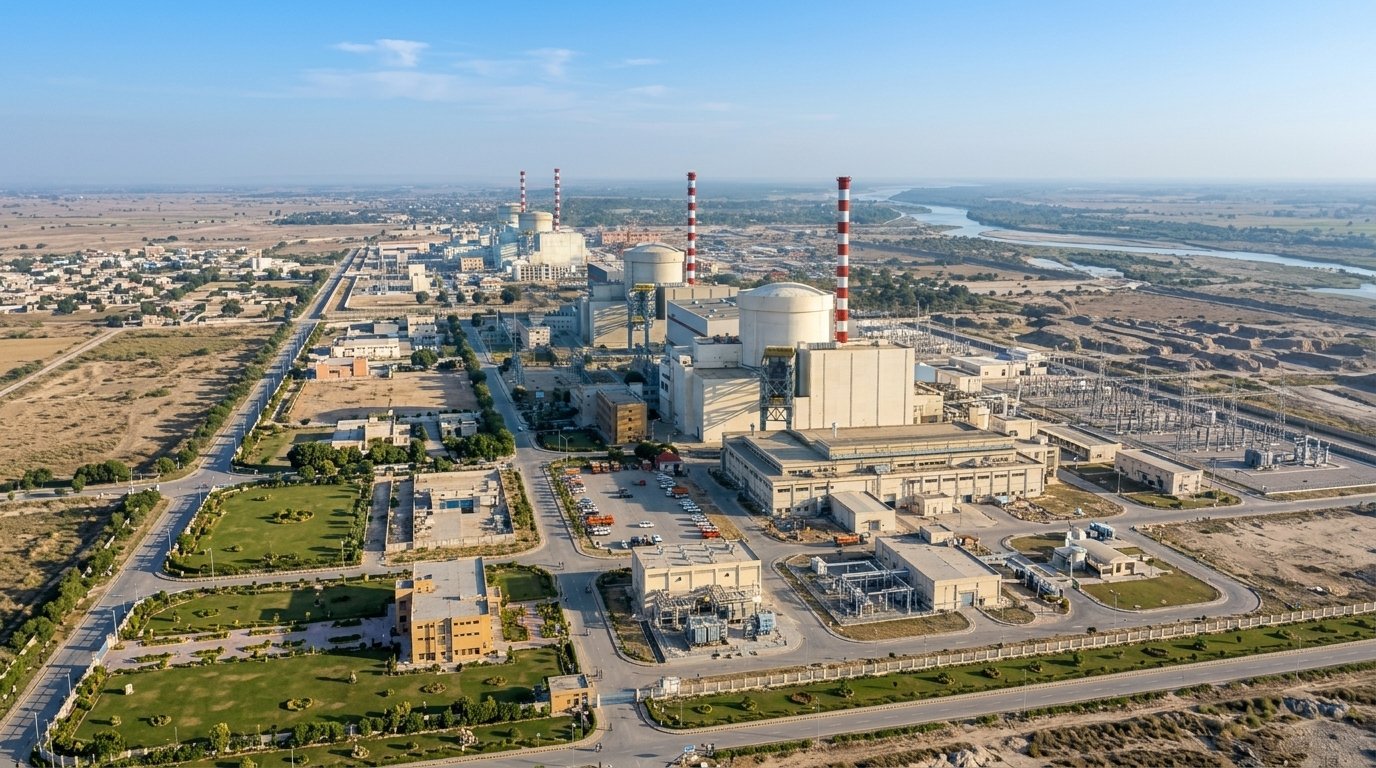
Mianwali, November 11, 2026 – Pakistan has achieved a significant milestone in its energy sector as the Pakistan Atomic Energy Commission (PAEC) successfully completed the dome placement of the Chashma-5 (C-5) Nuclear Power Plant in Mianwali, Punjab. The development marks an important stage in the construction of the country’s 1,200-megawatt nuclear power project.
Prime Minister Muhammad Shehbaz Sharif attended the dome placement ceremony as the chief guest, alongside Chief of Army Staff and Chief of Defence Forces Field Marshal Syed Asim Munir, Chinese officials and senior representatives of relevant organisations.
The successful installation of the reactor building’s dome represents substantial progress in the construction of the facility. The project is expected to begin electricity generation in September 2030 and is considered an important addition to Pakistan’s long-term energy infrastructure.
The Prime Minister appreciated the efforts of Pakistani and Chinese engineers, technicians and workers who contributed to achieving this construction milestone ahead of schedule. He also highlighted the importance of nuclear energy in strengthening national energy security, supporting economic development and promoting environmentally responsible electricity generation.
Chashma-5 Nuclear Power Plant Construction Milestone
The Pakistan Atomic Energy Commission achieved the dome placement milestone at the Chashma Nuclear Power Generating Station on November 10, 2026.
The ceremony marked an important development in the construction of the Chashma-5 Nuclear Power Plant, which is designed to generate 1,200 megawatts of electricity.
The reactor building dome is a major structural component of a nuclear power facility. It forms the upper enclosure of the reactor building, which houses the nuclear reactor and associated equipment. Its installation indicates that the project has progressed through a significant phase of structural construction.
The completion of this stage will allow the project to advance towards subsequent construction activities, equipment installation and technical preparations.
According to the official government announcement, the milestone was achieved well ahead of the scheduled timeline. The Prime Minister praised the commitment and professional capabilities of the teams involved in the project.
This development reflects Pakistan’s continued investment in nuclear energy infrastructure and its efforts to expand reliable electricity generation capacity.
Prime Minister Shehbaz Sharif Attends the Dome Placement Ceremony
Prime Minister Shehbaz Sharif attended the ceremony in Mianwali and appreciated the contributions of the professionals working on the Chashma-5 project.
Field Marshal Syed Asim Munir, Chief of Army Staff and Chief of Defence Forces, also participated in the event, along with Chinese representatives and senior officials from relevant organisations.
During his address, the Prime Minister emphasised that the project represents more than an infrastructure development. He described it as an important step towards building an economically stronger, energy-secure and environmentally responsible Pakistan.
Shehbaz Sharif also highlighted the importance of making effective use of national resources, advanced technology and skilled human capital.
He appreciated the dedication of Pakistani and Chinese engineers, technicians and workers whose combined efforts helped complete the dome placement ahead of schedule.
The Prime Minister further expressed gratitude to Chinese President Xi Jinping, the Chinese government and the China National Nuclear Corporation for their continued support of Pakistan’s civil nuclear energy programme.
Chashma-5 Project to Generate 1,200 Megawatts of Electricity
One of the most important features of the Chashma-5 project is its planned electricity generation capacity of 1,200 megawatts (MW).
Once operational, the facility will supply electricity to Pakistan’s national grid and contribute to the country’s overall power generation capacity.
According to the Pakistan Atomic Energy Commission and the Prime Minister’s Office, the plant is expected to commence electricity generation in September 2030.
The additional generation capacity is expected to strengthen the country’s electricity supply and support growing demand from households, industries, commercial establishments and public institutions.
Nuclear power plants can produce electricity continuously under normal operating conditions and are not directly dependent on daily weather conditions.
This characteristic makes nuclear energy an important source of dependable electricity within a diversified energy system that also includes hydropower, solar, wind and other generation technologies.
The Chashma-5 project is therefore expected to become an important part of Pakistan’s future energy infrastructure.
Nuclear Energy’s Contribution to Pakistan’s Power Sector

Nuclear power already plays a significant role in Pakistan’s electricity generation system.
During the dome placement ceremony, Chairman of the Pakistan Atomic Energy Commission Dr Raja Ali Raza Anwar highlighted the contribution of the country’s existing nuclear power plants to national energy security.
According to the official announcement, Pakistan’s nuclear power plants are generating approximately 3,530 megawatts of electricity.
The PAEC chairman also stated that nuclear energy accounts for around 16.6 percent of the country’s total electricity generation, despite representing approximately 8.6 percent of installed electricity generation capacity.
Its contribution reportedly increases to around 26 percent during winter.
These figures demonstrate the importance of nuclear power in Pakistan’s electricity mix and its contribution to providing a consistent source of electricity.
With the addition of Chashma-5, Pakistan aims to further expand its nuclear generation capacity and diversify its energy resources.
The expansion of nuclear infrastructure is particularly relevant to countries seeking to balance electricity demand, energy security and environmental considerations.
Nuclear Power and Environmental Sustainability
Environmental sustainability has become an important consideration in energy planning across the world.
Traditional electricity generation based on fossil fuels produces greenhouse gas emissions, particularly carbon dioxide, which contributes to global climate change.
Nuclear energy produces electricity through nuclear reactions rather than the combustion of fossil fuels. Although the construction, fuel cycle and operation of nuclear facilities have environmental considerations, nuclear power has very low direct greenhouse gas emissions during electricity generation.
For this reason, nuclear energy is considered a low-carbon electricity source and is included in the energy strategies of several countries.
During the Chashma-5 ceremony, the PAEC chairman stated that Pakistan’s existing nuclear power plants help avoid approximately 15 million tonnes of carbon dioxide emissions annually.
This figure highlights the reported contribution of nuclear electricity to reducing emissions from the power sector.
For Pakistan, expanding low-carbon electricity generation is relevant to its broader environmental objectives and efforts to address climate-related challenges.
However, nuclear energy also requires strict safety regulations, responsible radioactive waste management, environmental monitoring and long-term operational oversight.
The development of Chashma-5 therefore represents an expansion of electricity generation capacity alongside the continued importance of nuclear safety and environmental responsibility.
Pakistan-China Cooperation in Nuclear Energy Development
China has remained an important partner in Pakistan’s civil nuclear energy programme.
The Chashma-5 project reflects the continued cooperation between the two countries in nuclear technology, engineering and electricity infrastructure development.
Prime Minister Shehbaz Sharif appreciated China’s contribution and acknowledged the efforts of Chinese engineers and technical professionals working alongside their Pakistani counterparts.
He also expressed gratitude to Chinese President Xi Jinping, the Chinese government and the China National Nuclear Corporation for supporting the project.
According to government statements, Chashma-5 is the seventh nuclear power unit that China has helped Pakistan construct.
This cooperation demonstrates the longstanding relationship between the two countries and their continued engagement in strategic development projects.
Pakistan-China cooperation in the energy sector has contributed to the development of major electricity generation facilities and the expansion of technical expertise.
The Chashma-5 project is expected to further strengthen this partnership and create opportunities for continued collaboration in engineering, technology and infrastructure development.
Role of Pakistan Atomic Energy Commission in National Development

The Pakistan Atomic Energy Commission is responsible for promoting the peaceful applications of nuclear technology in Pakistan.
Its activities extend beyond electricity generation and include applications in healthcare, agriculture, scientific research and other technical fields.
In the energy sector, PAEC has played an important role in developing and operating nuclear power facilities that contribute to the national electricity supply.
The successful dome placement at Chashma-5 highlights the commission’s continued involvement in large-scale energy infrastructure development.
Such projects require coordination among engineers, scientists, technicians, construction professionals and regulatory organisations.
The development of nuclear infrastructure also requires specialised technical knowledge, quality assurance procedures and strict safety standards.
Through these activities, Pakistan continues to develop its technical capabilities and institutional experience in the peaceful use of nuclear technology.
Strengthening Pakistan’s Long-Term Energy Security
Energy security remains an important national priority for Pakistan.
A stable and reliable electricity supply is essential for industrial production, economic activities, healthcare facilities, educational institutions and household needs.
Dependence on imported fuels can expose the economy to international market fluctuations, changing fuel prices and external supply disruptions.
Expanding electricity generation through different domestic and low-carbon energy sources can help diversify the national energy mix.
Nuclear power offers an opportunity to generate electricity continuously without direct dependence on imported fossil fuels for day-to-day generation.
The planned 1,200 MW capacity of Chashma-5 is expected to strengthen Pakistan’s electricity generation infrastructure once the facility becomes operational.
The project may also contribute to supporting industrial development and improving the availability of electricity for different sectors of the economy.
However, the overall impact on electricity prices and energy imports will depend on construction costs, financing arrangements, fuel procurement, operational performance and wider energy-sector policies.
Economic Opportunities and Technical Development
Large infrastructure projects can create opportunities for professional development, technical training and industrial cooperation.
The construction of Chashma-5 involves specialised engineering activities and coordination between Pakistani and Chinese professionals.
The project requires expertise in civil engineering, mechanical engineering, electrical systems, nuclear technology, construction management and quality assurance.
The continued development of nuclear infrastructure can strengthen Pakistan’s technical workforce and provide valuable experience in advanced engineering projects.
Such expertise may also contribute to other areas of national development, particularly in science, technology and infrastructure management.
In addition, the project involves a wide range of organisations, contractors, suppliers and technical professionals.
The development of such facilities demonstrates the importance of long-term planning, institutional cooperation and investment in specialised human resources.
Once operational, the plant is expected to contribute electricity to the national grid and support economic activities across different sectors.
Construction Progress and Expected Operational Timeline

The successful dome placement marks a significant stage in the construction of Chashma-5.
According to official information, the milestone was achieved ahead of schedule, demonstrating progress in the project’s structural development.
However, dome placement does not mean that the nuclear power plant is ready to generate electricity.
Several important stages remain before commercial operation can begin. These include completing the remaining construction activities, installing internal systems and equipment, conducting technical inspections, performing commissioning tests and obtaining the required regulatory approvals.
Nuclear power facilities must meet strict safety and operational requirements before they can begin generating electricity.
The government has announced September 2030 as the expected date for the commencement of electricity generation at Chashma-5.
The successful completion of the dome placement represents progress towards this target, although the remaining construction and commissioning activities will determine the final operational timeline.
Nuclear Safety and Regulatory Oversight
Nuclear safety is an essential requirement in the development and operation of every nuclear power facility.
Nuclear power plants are designed and operated under strict technical standards intended to protect workers, surrounding communities and the environment.
These standards cover the design of reactor buildings, equipment reliability, radiation protection, emergency preparedness, operational procedures and radioactive waste management.
For a project such as Chashma-5, regulatory oversight and technical assessments remain important throughout construction, testing and operation.
The International Atomic Energy Agency (IAEA) provides international standards and guidance for nuclear safety, security and safeguards.
Pakistan’s nuclear energy programme operates within a regulatory framework that includes the Pakistan Nuclear Regulatory Authority (PNRA).
The completion of the dome placement is a construction milestone. It does not replace the remaining safety assessments, inspections and commissioning requirements.
Maintaining strong regulatory oversight will remain essential as the project progresses towards its expected operational date.
Chashma-5 Strengthens Pakistan’s Future Energy Outlook
The Chashma-5 project represents an important addition to Pakistan’s long-term electricity generation plans.
With its planned capacity of 1,200 MW, the facility is expected to increase the contribution of nuclear power to the national energy mix.
Its development also reflects Pakistan’s interest in expanding low-carbon electricity generation while improving the reliability of its energy infrastructure.
The project demonstrates the importance of international cooperation, technical expertise and long-term investment in major energy facilities.
Pakistan’s future energy requirements will depend on a balanced approach involving different sources of electricity, improved transmission infrastructure, energy efficiency and responsible resource management.
Nuclear energy can contribute to this strategy by providing dependable low-carbon electricity alongside renewable sources such as solar, wind and hydropower.
The successful dome placement is therefore an encouraging development for Pakistan’s energy sector.
Conclusion: A Major Step Towards an Energy-Secure Pakistan
The successful dome placement of the Chashma-5 Nuclear Power Plant marks a significant milestone for the Pakistan Atomic Energy Commission and the country’s nuclear energy programme.
The 1,200 MW project is expected to strengthen national electricity generation capacity and contribute to a more diversified energy mix when it becomes operational.
Prime Minister Shehbaz Sharif’s participation in the ceremony, alongside Field Marshal Syed Asim Munir and Chinese representatives, highlights the national importance of the project and the continued cooperation between Pakistan and China.
Although construction, technical testing and regulatory procedures remain ahead, the latest achievement represents substantial progress towards the expected September 2030 electricity generation target.
As Pakistan continues to pursue energy security, economic development and environmental sustainability, Chashma-5 is expected to become an important part of its future energy infrastructure.
Source: Pakistan Press Information Department (PID), Radio Pakistan, Dawn and The News International.
Publication Date: November 11, 2026.
News Flayer — Pakistan News, National Updates and Breaking Headlines.