
The Punjab government has deployed 67 rapid-response units staffed by 750 officers to tackle crop-residue fires that contribute to seasonal air pollution and winter smog across the province. The teams aim to reach reported agricultural fires within 10 to 15 minutes, as authorities expand efforts to prevent farmers from burning leftover crops after the rice harvest.
The initiative is part of a wider campaign led by Punjab’s Environment Protection and Climate Change Department to control illegal stubble burning, reduce smoke emissions and improve air quality. The units are operating across major rice-growing districts, where farmers commonly burn leftover rice residue to prepare fields for the next crop.
According to a Reuters report published on November 14, 2026, provincial authorities said their department received 679 reports of field fires during a single 24-hour period and extinguished 650 of them. The figures indicate the scale of the enforcement operation and the challenges authorities face in controlling agricultural fires.
The government has also introduced financial penalties for farmers who burn crop residue and is encouraging the use of alternative agricultural machinery. More than 10,000 subsidised super seeders have been distributed, with the government covering 60 per cent of their cost.
The campaign comes as Lahore and other parts of the region experience another period of seasonal smog. Although officials have reported improvements in some indicators, residents and hospital patients continue to describe problems associated with poor air quality.
Punjab Establishes 67 Rapid-Response Units to Control Crop Fires
New Environmental Protection Force Includes 750 Officers
Punjab has established a 750-member force organised into 67 rapid-response units to address crop-residue fires across major rice-growing districts.
Silwat Saeed, head of the provincial Environment Protection and Climate Change Department, said the units were formed to strengthen the government’s response to illegal stubble burning.
The teams are designed to respond quickly when fires are reported in agricultural fields. Their responsibilities include reaching affected locations, controlling fires and helping prevent smoke from spreading into nearby communities.
The initiative is described by officials as Pakistan’s first dedicated force of its kind for tackling pollution through rapid intervention against field fires.
The deployment represents a more organised approach to agricultural fire monitoring. Rather than relying only on inspections after complaints, the units also patrol agricultural areas to identify burning and respond to reports from local residents.
Teams Aim to Reach Reported Fires Within 10 to 15 Minutes
The rapid-response units aim to reach reported field fires within 10 to 15 minutes, according to officials quoted by Reuters.
Ashfaq Hussain, a deputy director of the force, said complaints are received through multiple channels and teams respond as quickly as possible.
The response system is intended to reduce the time between the reporting of a fire and the arrival of enforcement personnel. Faster intervention can help prevent individual field fires from continuing unchecked and adding further smoke to already polluted air.
The teams also conduct patrols in rice-growing areas, particularly where crop residue is commonly burned after harvesting.
The government hopes that a combination of monitoring, rapid intervention and penalties will discourage farmers from using open burning as a method of clearing their fields.
Punjab Reports 650 Extinguished Fires in a Single Day
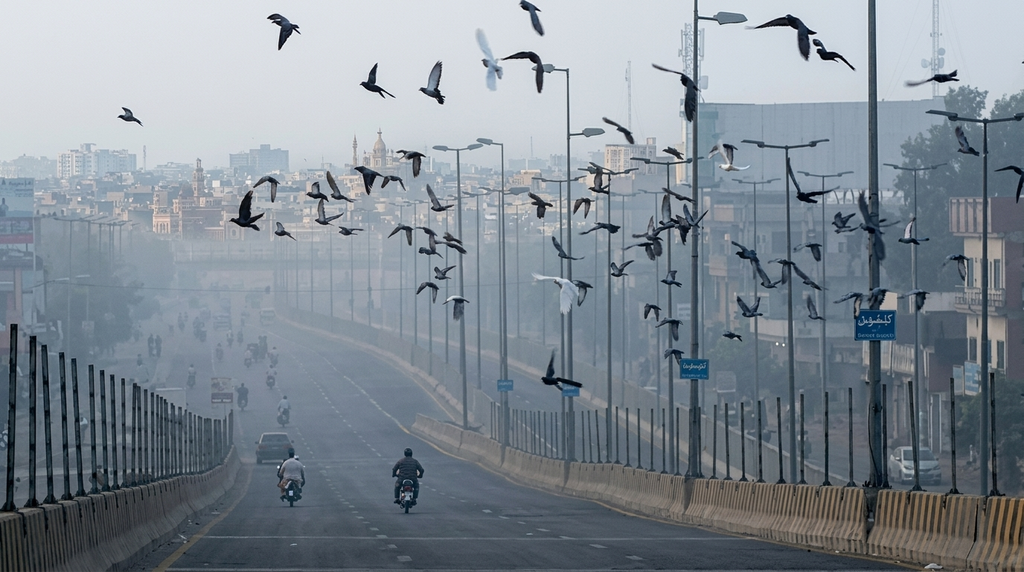
Authorities Receive 679 Reports of Agricultural Fires
The scale of the challenge became clear during a 24-hour period in which Punjab’s Environment Protection and Climate Change Department received 679 reports of field fires across the province.
Officials said that 650 of these reported fires were extinguished during that period.
The figures demonstrate the volume of reports handled by the provincial response system and the importance of having teams available across major agricultural districts.
Crop-residue burning is a seasonal concern because farmers commonly set leftover rice straw and other agricultural material alight after the October harvest. The practice is used to clear fields quickly before preparing them for the next crop.
However, smoke from these fires adds to pollution from vehicles, industrial activity and construction dust. During colder weather, atmospheric conditions can contribute to the accumulation of pollutants near the ground.
The provincial government’s response is intended to reduce one source of this wider pollution problem.
Field Patrols and Public Complaints Support Enforcement
The rapid-response operation relies on both direct monitoring and information supplied by the public.
Officials patrol agricultural areas to identify possible fires, while residents can submit complaints through local reporting channels. The information is then used to direct response teams towards affected fields.
This approach allows authorities to monitor large agricultural areas while also receiving information from communities that may notice smoke or burning before enforcement teams arrive.
The department’s reported response to hundreds of fire complaints in a single day illustrates the operational demands placed on the new force.
However, the number of fires reported also shows that enforcement alone may not eliminate the practice. Authorities are therefore combining penalties with financial support for alternative farming equipment.
Punjab Strengthens Penalties Against Illegal Crop Burning
Crop Burning Can Result in a Fine of Rs15,000 Per Acre
Punjab has introduced financial penalties to discourage farmers from burning leftover crop residue.
Muhammad Farooq, an assistant director of the Punjab Agriculture Department, told Reuters that farmers caught burning stubble can face a fine of Rs15,000 per acre.
The penalty is intended to make illegal burning a costly practice and encourage farmers to consider alternative ways of managing agricultural residue.
Authorities have also indicated that violators may face arrest or prosecution. Farmers who fail to pay the imposed fines can face legal proceedings.
The enforcement policy forms part of the province’s wider effort to reduce agricultural smoke during the winter pollution season.
The government is seeking to make compliance more attractive by providing subsidised machinery alongside penalties for prohibited burning.
Violators May Face Prosecution and Up to Six Months in Jail
The consequences for farmers who do not pay the prescribed fines can extend beyond financial penalties.
According to the Punjab Agriculture Department official quoted by Reuters, offenders may face prosecution and a possible prison term of up to six months.
The measures are intended to strengthen enforcement and discourage repeated violations.
However, the long-term effectiveness of the policy will also depend on whether farmers can access practical and affordable alternatives to burning.
Agricultural residue must be managed before the next crop is planted, and farmers often work within tight seasonal schedules. Providing equipment and support can therefore be important in helping them follow environmental regulations.
The combination of enforcement and alternative machinery is central to the province’s current approach.
Government Promotes Super Seeders as an Alternative to Crop Burning
More Than 10,000 Subsidised Machines Distributed to Farmers
Alongside its enforcement campaign, the Punjab government is promoting super seeders to help farmers manage leftover crop residue without burning it.
According to Reuters, more than 10,000 subsidised super seeders have been distributed under the programme.
These machines allow farmers to sow wheat directly into fields containing rice residue, reducing the need to burn leftover material before preparing the land for the next crop.
The government is covering 60 per cent of the machinery cost, while farmers pay the remaining 40 per cent.
The subsidy is intended to make the equipment more affordable and encourage wider adoption among agricultural communities.
The programme reflects an effort to address the reasons farmers continue burning crop residue, rather than relying entirely on penalties.
Some Farmers Report Improved Wheat Yields After Using Machinery
Farmers quoted in the Reuters report described different experiences with alternatives to stubble burning.
Muhammad Ismail, who farms 50 acres, said switching to a subsidised super seeder and other machinery had significantly improved his wheat yield per acre.
Another farmer, Saleem Abbas, said he had also moved away from burning crop residue.
However, the adoption of alternative machinery remains incomplete. Some farmers continue to regard burning as the cheapest and fastest way to clear fields after the rice harvest.
The difference in experiences highlights the importance of affordability, access to equipment and awareness when introducing changes to agricultural practices.
For the programme to achieve wider adoption, farmers need practical alternatives that fit their farming schedules and economic circumstances.
Winter Smog Remains a Serious Concern for Lahore

Agricultural Smoke Adds to Other Sources of Air Pollution
Lahore and other parts of the region face recurring winter air pollution caused by a combination of emissions and weather conditions.
Crop-residue fires are one source of smoke, but they are not the only contributor. Industrial emissions, vehicle exhaust and construction dust also add pollutants to the atmosphere.
During colder months, weather conditions can limit the dispersal of pollution and allow pollutants to accumulate near the ground.
Farmers commonly burn leftover rice residue after the October harvest to prepare fields for wheat cultivation. The smoke from these fires can contribute to the wider pollution problem affecting urban and rural communities.
The new rapid-response units are intended to address this agricultural source while the government continues broader efforts to control pollution.
Lahore was rated very unhealthy by Swiss air-quality monitoring group IQAir earlier in the week, according to Reuters.
Residents Continue to Report Breathing and Eye Problems
Despite official claims of progress, residents continue to express concern about the effects of poor air quality.
Reuters reported that patients had crowded hospital benches and corridors in Lahore in recent days.
People interviewed by the news agency described breathing difficulties, blocked noses, throat discomfort and eye problems associated with the polluted conditions.
These accounts illustrate the continuing public health concerns surrounding winter smog.
The Punjab Environment Protection Department’s director general, Abdullah Nayyar, said health department data showed that smog-related throat hospitalisations in October were 69 per cent of the level recorded in October 2025.
Although the official figure indicates a reduction compared with the previous year, residents’ experiences show that pollution remains a concern for communities.
Punjab Reports Progress in Controlling Agricultural Fires
Satellite Data Shows Less Burned Land Than Historical Averages
Punjab officials have pointed to satellite observations as one indication that agricultural burning has declined.
Reuters reported that satellite data showed less burned land in Pakistan and India than the historical average at that point in the year.
This finding suggests that the extent of burning detected so far has been lower than the historical comparison used in the report.
However, satellite observations of burned land do not by themselves establish that air pollution has been eliminated or that all communities are experiencing better air quality.
The government’s rapid-response programme is one of several measures being used to address the problem.
Continued monitoring will be important for assessing whether the reduction in burned areas is sustained throughout the agricultural season.
Local Experiences Highlight the Need for Continued Action
While officials have reported improvements in some indicators, many residents say they have not noticed a substantial improvement in everyday air quality.
The continuing presence of patients with breathing and eye complaints highlights the gap that can exist between province-wide measurements and individual experiences.
The effectiveness of the campaign will depend on several factors, including the number of fires prevented, the adoption of alternative farming machinery and wider reductions in pollution from other sources.
The rapid-response force may help control reported fires, but crop burning is only one part of the wider smog problem.
Continued monitoring, public reporting and cooperation between agricultural communities and environmental authorities will remain important.
Pakistan and India Face a Shared Regional Air Pollution Challenge
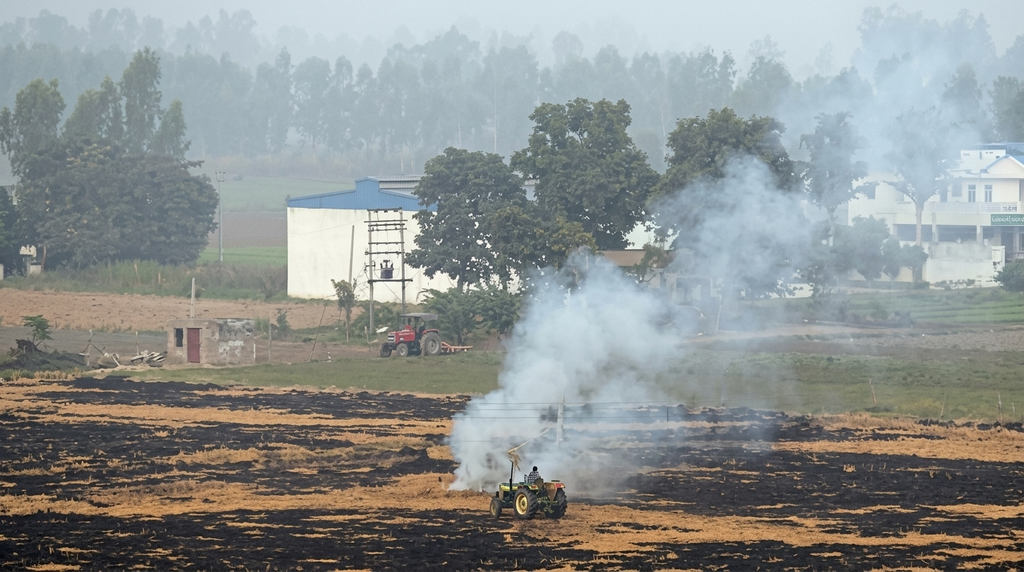
Agricultural Burning Extends Beyond National Borders
Seasonal agricultural burning is not limited to Pakistan. Farmers in parts of India also burn crop residue after harvest, contributing to air pollution across the wider South Asian region.
The movement of air across national borders means pollution cannot always be addressed through measures taken by a single country.
Reuters reported that Pakistan and India have repeatedly accused each other of contributing to regional air pollution.
Silwat Saeed said the challenge is significant for both countries and that Pakistan has raised the issue with Indian officials at international forums.
The regional nature of the problem makes cooperation important, particularly when pollution sources and weather conditions affect communities on both sides of the border.
Regional Cooperation Can Support Long-Term Pollution Control
Addressing seasonal smog requires sustained action on several fronts.
Reducing crop-residue burning, improving agricultural practices and controlling industrial and vehicle emissions are all important parts of a broader air-quality strategy.
Cooperation between neighbouring countries can also support information-sharing and discussion of cross-border pollution concerns.
The latest Punjab initiative focuses on agricultural fires within the province, but the wider regional challenge requires continued environmental planning and coordination.
The effectiveness of long-term action will depend on whether governments can combine enforcement, practical support for farmers and broader pollution-control policies.
Punjab Expands Environmental Enforcement Across Agricultural Districts
Rapid-Response Teams Strengthen Field Monitoring
The deployment of dedicated teams adds a new operational layer to Punjab’s efforts to monitor agricultural fires.
Their responsibilities include responding to complaints, patrolling vulnerable areas and helping control fires reported by residents or identified during field inspections.
The programme also places greater emphasis on response time. By aiming to reach reported incidents within 10 to 15 minutes, authorities hope to limit the duration of individual fires.
The effectiveness of this approach will depend on the availability of teams, their geographical coverage and coordination with local authorities.
Continued reporting of fire incidents can also help officials identify areas where additional monitoring or farmer outreach may be required.
Sustainable Farming Practices Support Cleaner Air
Enforcement is only one part of the province’s strategy. Providing farmers with affordable alternatives is also necessary to reduce reliance on burning.
Super seeders and other residue-management machinery can help farmers prepare fields without setting leftover crops alight.
The government subsidy is intended to reduce the financial barrier to adopting this equipment.
Wider use of alternative farming methods could help reduce agricultural smoke while allowing farmers to maintain their seasonal planting schedules.
Long-term progress will require continued access to suitable machinery, practical support and cooperation between farmers and environmental authorities.
Conclusion: Punjab Expands Its Campaign Against Crop Burning
Rapid-Response Units Strengthen Agricultural Fire Control
Punjab’s deployment of 67 rapid-response units staffed by 750 officers represents a major enforcement effort against crop-residue burning.
The teams aim to reach reported fires within 10 to 15 minutes, while provincial officials said they extinguished 650 of 679 reported fires during a single 24-hour period.
The government has also introduced fines of Rs15,000 per acre for farmers caught burning stubble, with possible prosecution and imprisonment for those who fail to pay the penalties.
These measures are designed to discourage agricultural burning and reduce one source of seasonal smoke.
Sustainable Farming Alternatives Remain Essential for Cleaner Air
The distribution of more than 10,000 subsidised super seeders provides farmers with an alternative to burning leftover crop residue.
The government is covering 60 per cent of the equipment cost, while farmers contribute the remaining 40 per cent.
Although some farmers have reported benefits from using the machinery, wider adoption remains a challenge because burning is still viewed by some as a cheaper and faster option.
The province’s efforts will therefore depend not only on enforcement but also on making alternative farming practices accessible and practical.
As winter smog continues to affect Lahore and other areas, controlling crop fires alongside industrial emissions, vehicle pollution and construction dust will remain important for improving air quality across Punjab.
NewsFlayer — Stay Informed with the Latest News of Pakistan and the World.