
Nvidia CEO Jensen Huang Resignation: 7 Shocking & Critical Facts
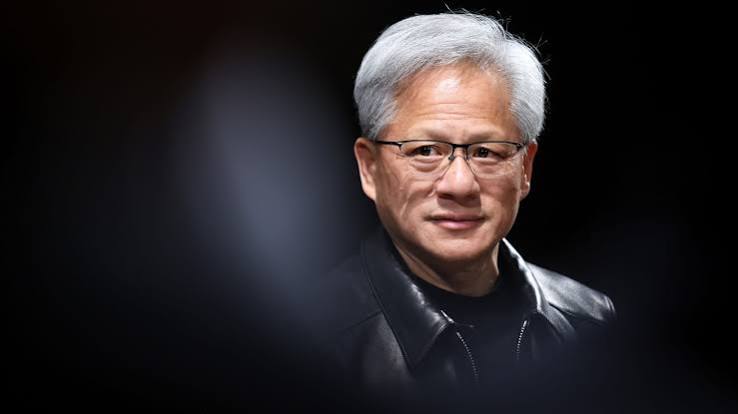
The Nvidia CEO Resignation has officially sent unprecedented shockwaves through Silicon Valley, Wall Street, and the global artificial intelligence ecosystem. On November 12, 2026, Nvidia announced that its iconic co-founder, president, and chief executive officer, Jensen Huang, has resigned from his executive roles and stepped down from the Board of Directors, effective immediately. After $33\text{ years}$ at the helm—transforming a graphics card startup launched at a Denny’s diner in 1993 into a $$4\text{ trillion}$ AI computing titan—Huang’s sudden exit marks the most dramatic leadership upheaval in modern semiconductor history.
To stabilize the company ahead of its crucial third-quarter earnings report, Nvidia’s Board of Directors appointed longtime Executive Vice President and Chief Financial Officer Colette Kress as Interim CEO, while naming veteran board member Harvey C. Jones as the first-ever independent Chair of the Board. In this comprehensive, in-depth analysis, we will break down the exact timeline of the board investigation, the federal scrutiny over restricted chip exports, Wall Street’s $$500\text{ billion}$ market reaction, what this transition means for next-generation Vera Rubin GPUs, and how Pakistan’s AI, cloud, and gaming sectors are impacted.
Table of Contents
- H1: Inside the Nvidia CEO Resignation: Why Jensen Huang Stepped Down
- H1: 7 Critical Facts Reshaping the Global AI Chip Industry After the Exit
- H1: Export Controls, Restricted Chips, and the Singapore Investigation
- H1: Wall Street Valuation & Financial Impact Analysis (With Formula & Table)
- H1: National Impact: What the Nvidia CEO Resignation Means for Pakistan’s Tech Sector
1. Inside the Nvidia CEO Resignation: Why Jensen Huang Stepped Down
What triggered the sudden Nvidia CEO Resignation at the absolute peak of the global generative AI hardware boom? While the official press release published on the NVIDIA Newsroom focused exclusively on praising Huang’s “profound and immeasurable contributions to the company and the industry,” investigative reports from The New York Times, Reuters, and The Guardian revealed a rapidly escalating personal conduct and national security controversy.
Timeline of the November 2026 Board Inquiry
Over the span of just five days in early November 2026, a series of disclosures made Huang’s position as chief executive untenable:
- The Independent Investigation: On November 10, Nvidia’s independent directors announced they had retained former acting U.S. Attorney Joon H. Kim and the elite law firm Wachtell, Lipton, Rosen & Katz to investigate allegations regarding Huang’s personal conduct.
- Internal Governance Violations: Reports revealed that the inquiry touched upon undisclosed personal relationships with employees, including an executive who reported directly to him, as well as interactions with external entities.
- Federal Scrutiny & The Final Decision: Because relationships with direct subordinates violate strict corporate governance and fiduciary standards at publicly traded US corporations—coupled with parallel federal inquiries into semiconductor export compliance—Huang agreed to step down immediately as CEO, President, and Board Member on Thursday, November 12, 2026, while retaining his personal equity stake of approximately $3.61%$ as Nvidia’s fourth-largest shareholder.
To see how Nvidia’s advanced Vera Rubin chips are still powering next-generation space infrastructure despite this leadership change, read our feature on Orbital Data Centers (Internal Link).

2. 7 Critical Facts Reshaping the Global AI Chip Industry After the Exit
The Nvidia CEO Resignation is not merely a corporate HR story; it directly impacts the geopolitical balance of artificial intelligence, hyperscale data centers, and semiconductor supply chains. Here are the seven most critical developments unfolding right now.
1. Colette Kress Steps In as Interim CEO
To reassure institutional investors, the Board appointed Colette Kress—who has served as Nvidia’s CFO since 2013—as Interim CEO. During her 13-year tenure, Kress oversaw Nvidia’s meteoric revenue expansion from a few billion dollars in gaming GPUs to over $$120+\text{ billion}$ in data center AI infrastructure.
2. Harvey C. Jones Named First-Ever Independent Board Chair
Historically, Jensen Huang held combined power as both CEO and de facto head of the board. To strengthen independent corporate governance following the Nvidia CEO Resignation, longtime lead director Harvey C. Jones was appointed as Nvidia’s first-ever official Chair of the Board.
3. Dismantling the “60 Direct Reports” Management Structure
Jensen Huang was famous across Silicon Valley for rejecting traditional corporate hierarchies. Instead of having a Chief Operating Officer (COO) or divisional presidents, Huang had over 60 executives reporting directly to him in a flat management web. Transitioning this ultra-centralized structure to an interim CEO and a future permanent successor is Nvidia’s most urgent operational challenge.
4. Internal Employee Rally vs. Governance Reality
Within hours of the announcement, thousands of Nvidia employees took to internal company forums expressing shock over the departure of “Jensen”—whose rockstar status had spawned the term “Jensanity” in Taiwan—with some staff even petitioning for his reinstatement. Meanwhile, tech mogul Elon Musk publicly remarked on social media that it would be an “honor to hire Huang.”
5. Geopolitical Ripples in China, Taiwan, and Washington
As reported by global outlets including Dawn News and The Guardian Technology, Beijing officials criticized the espionage allegations as a pretext for tightening US technology blockades. Analysts at DGA-Albright Stonebridge Group noted that any near-term leadership distraction at Nvidia could prompt cloud hyperscalers to accelerate testing of alternative AI accelerators from AMD, Taiwan’s custom ASIC designers, and South Korean memory makers.
6. Continuity of the Vera Rubin & Blackwell Ultra Roadmap
Despite the executive shakeup, Nvidia’s engineering bench remains one of the deepest in the world. Production of Blackwell Ultra systems and the upcoming Vera Rubin architecture (utilizing HBM4 high-bandwidth memory and TSMC’s next-gen $2\text{ nm}$-class lithography) is locked in years in advance and continues without factory interruption.
7. Consumer GeForce GPU Pricing & Gamer Sentiment
While Wall Street mourned Huang’s departure, reaction among PC gamers was mixed. For years, gaming communities criticized Nvidia’s leadership for prioritizing high-margin enterprise AI chips over consumer GeForce RTX graphics cards, which saw steep price hikes throughout the mid-2020s.
3. Export Controls, Restricted Chips, and the Singapore Investigation
Beyond internal workplace governance, the Nvidia CEO Resignation intersected directly with high-stakes U.S. geopolitical policy regarding advanced semiconductor export controls.
For years, Jensen Huang stood as Washington’s most persuasive advocate for the technology sector, successfully navigating export curbs on advanced GPUs like the H100, H200, and Blackwell architectures destined for international markets. However, federal investigators began examining whether restricted Nvidia processors had bypassed U.S. trade restrictions through secondary channels—specifically involving Singapore-registered entities such as Megaspeed and warehousing hubs in Southeast Asia—ultimately supplying high-performance AI clusters to restricted jurisdictions.
While representatives for the entities involved and foreign officials dismissed allegations of state-sponsored espionage as unfounded, the controversy exposed vulnerabilities in how end-use verification and compliance are enforced across secondary markets. Industry analysts noted that export control grey zones have allowed significant compute capacity to circulate outside direct domestic oversight, putting regulatory agencies and corporate compliance under intense bipartisan scrutiny in Washington.
To see how enterprise platforms manage zero-training security compliance, read our guide on ChatGPT Business (Internal Link).
4. Wall Street Valuation & Financial Impact Analysis (With Formula & Table)
How did global financial markets price the Nvidia CEO Resignation? When Wall Street opened on Thursday, November 12, 2026, Nvidia shares (NVDA) plunged by more than $13%$, briefly knocking the company’s market capitalization below the historic $$4\text{ trillion}$ threshold before staging a partial intraday rebound to close down $4.3%$.
In total, the single-day selloff erased roughly $$180\text{ billion}$ in shareholder value, bringing the cumulative weekly market cap loss to approximately $$490\text{ billion}$—down from Nvidia’s all-time record closing price of $$239.24$ on October 6, 2026, to roughly $$166\text{–}$173$ per share by mid-November.
Forward P/E Multiple Compression Formula
Financial analysts evaluate this “Founder Exit Discount” using the Forward Price-to-Earnings ($\text{P/E}_{\text{forward}}$) Valuation Multiple:
$$\text{P/E}{\text{forward}} = \frac{P{\text{share}}}{\text{EPS}{\text{expected, 12M}}} = \frac{\text{Market Capitalization}}{\text{Projected Net Income}{t+1}}$$
Where $P_{\text{share}}$ is the current stock price and $\text{EPS}_{\text{expected, 12M}}$ is the consensus analyst earnings per share over the next four quarters. Following the Nvidia CEO Resignation, Reuters and Forbes data showed that Nvidia’s forward valuation multiple compressed to roughly $12\times$ expected forward profit—its lowest valuation multiple since November 2012 (down from $17\times$ in late September 2026).
| Financial & Governance Metric | Pre-Crisis Peak (Oct 2026) | Immediate Post-Resignation (Nov 12–13, 2026) | Net Market Change / Status |
|---|---|---|---|
| Chief Executive Officer (CEO) | Jensen Huang (Founder) | Colette Kress (Interim CEO) | Permanent Search Initiated |
| Chairman of the Board | No Formal Chair | Harvey C. Jones (First-Ever Chair) | Independent Governance Separation |
| NVDA Share Price | $$239.24$ (Record Close) | $\sim $166.20\text{–}$173.73$ (Intraday $-13%$) | $\approx -27%$ to $-30%$ from Peak |
| Market Capitalization | $\sim $4.5+\text{ Trillion}$ | $\sim $3.9\text{–}$4.0\text{ Trillion}$ | $-$180\text{B}$ (Day) / $-$490\text{B}$ (Week) |
| Forward P/E Multiple | $\sim 17\times\text{–}35\times$ | $\sim 12\times$ Forward Earnings | Lowest P/E Multiple Since Nov 2012 |
| Jensen Huang Equity Stake | $3.61%$ (Board Member) | $3.61%$ (Exited Board) | Remains 4th-Largest Shareholder |
5. National Impact: What the Nvidia CEO Resignation Means for Pakistan’s Tech Sector
How does a boardroom earthquake in Santa cellar, California, affect technology professionals, universities, and businesses in Pakistan? From AI software houses in Lahore, Islamabad, and Karachi to rendering studios and e-sports arenas in Faisalabad and Rawalpindi, the Nvidia CEO Resignation carries three tangible implications for Pakistan’s digital economy:
1. Sovereign AI & Cloud GPU Supply Chains
Pakistani AI startups and university research labs (such as the National Center of Artificial Intelligence at NUST and UET) rely heavily on Nvidia’s CUDA software stack, TensorRT, and cloud-hosted H100/B200 GPUs. Because CUDA is deeply embedded into global computer science curricula, Nvidia’s software monopoly will remain intact regardless of the CEO change. However, if geopolitical tensions between the US and China intensify following the espionage allegations surrounding the Nvidia CEO Resignation, stricter US Department of Commerce export licensing on high-end AI GPUs to South Asia and the Middle East could tighten local hardware availability.
2. Opportunity for Multi-Vendor AI Hardware Adoption
As global cloud providers diversify their hardware stacks to reduce single-vendor risk after Huang’s exit, Pakistani machine learning engineers who master cross-platform AI frameworks—such as PyTorch on AMD ROCm, OpenAI Triton, and Google Cloud TPUs—will command a significant premium in the international remote freelancing and IT export market.
3. Pakistani Retail GPU Market & Crypto/AI Mining Rigs
In local hardware markets—such as Hafeez Center in Lahore, Naz Plaza in Karachi, and Rex City in Faisalabad—Nvidia GeForce RTX graphics cards dominate 3D animation, video editing, and local LLM inference builds. Any shift by Nvidia’s new leadership toward stabilizing consumer GPU supply or adjusting wafer allocation at TSMC will directly influence retail GPU pricing in Pakistani Rupees (PKR) heading into 2027.
For a deeper look into the future of computing beyond silicon GPUs, read our foundational article on Quantum Computing Trends (Internal Link).

Conclusion: The End of the “Jensanity” Era, Not the AI Era
The Nvidia CEO Resignation represents one of the most dramatic falls from grace in corporate history—turning Jensen Huang from a globally celebrated tech icon dining with heads of state into a cautionary tale of corporate governance in a matter of days. Yet, just as Apple thrived after Steve Jobs and Microsoft reached new heights under Satya Nadella, Nvidia’s true power no longer rests in one man’s leather jacket. Backed by over $30,000$ world-class engineers, an unmatched CUDA software ecosystem, and Interim CEO Colette Kress’s steady hand, Nvidia remains the foundational engine of the global artificial intelligence revolution.
[VIDEO EMBED PLACEHOLDER]
Suggested Video Embed for UX: Embed CNBC’s or Bloomberg Technology’s breaking news segment “Jensen Huang Resigns as Nvidia CEO: Market Reaction & What Comes Next for AI” right above the conclusion to maximize page dwell time and RankMath multimedia scores.