lilythomus.info@gmail.com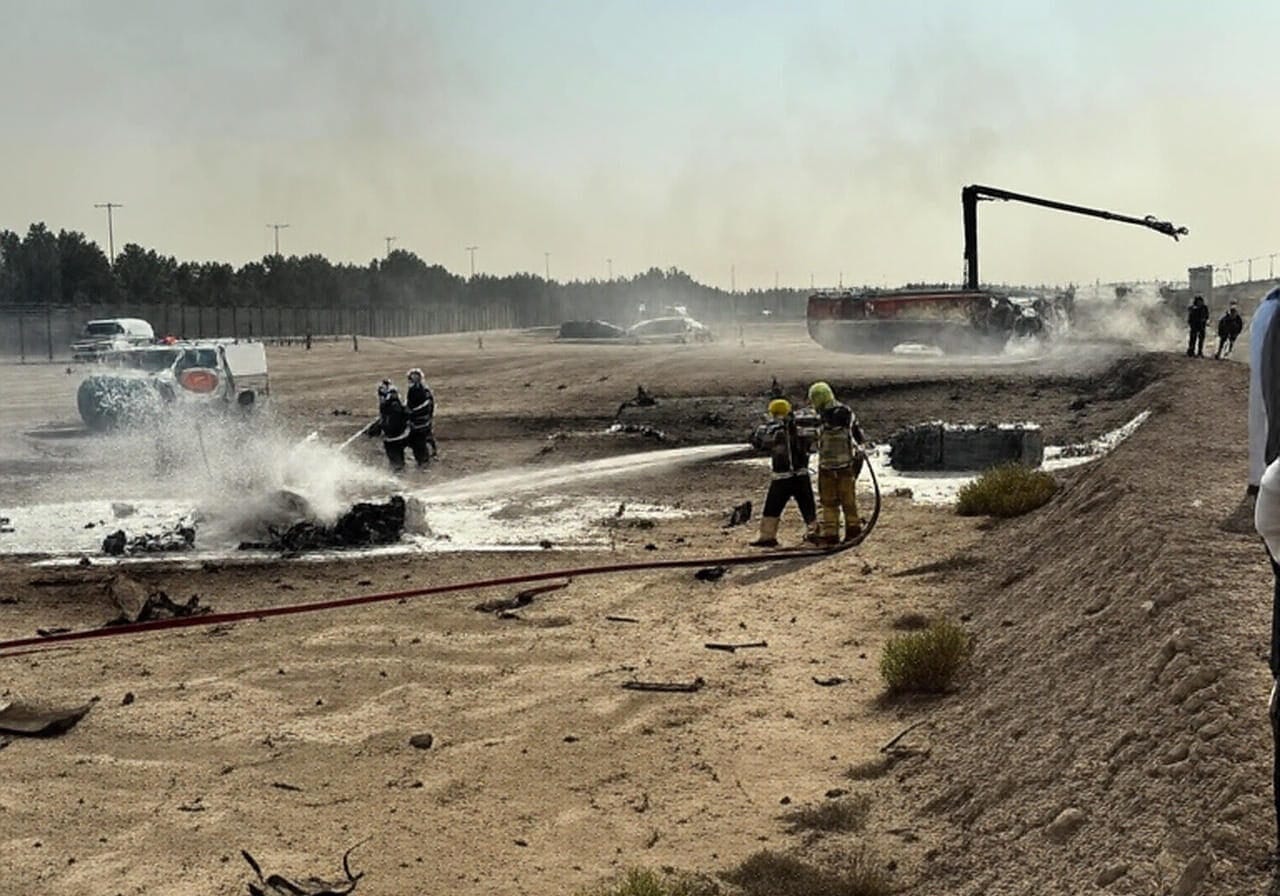
By Newsflayer| November 21, 2025
In a heartbreaking turn on the final day of one of the world’s premier aviation extravaganzas, an Indian Air Force (IAF) Tejas fighter jet plummeted to the ground during a high-stakes aerial display at the Dubai Airshow 2025, erupting into a massive fireball and claiming the life of its skilled pilot. The incident, witnessed by thousands of spectators at Al Maktoum International Airport, has cast a somber shadow over the event, prompting swift emergency responses and a full-scale investigation into what went catastrophically wrong.
The Moment of Horror: A Routine Display Turns Deadly
The biennial Dubai Airshow, running from November 17 to 21 and featuring over 1,500 exhibitors and 180 aircraft, was winding down with its signature afternoon flying demonstrations. Just after 2:10 PM local time, the spotlight turned to India’s indigenous pride—the HAL Tejas Light Combat Aircraft (LCA) Mk-1—from the IAF’s elite No. 3 Squadron. The single-engine, delta-wing jet, known for its agility and role in showcasing India’s self-reliance in defense manufacturing, had already thrilled the crowd with several low passes and maneuvers.
Eyewitness accounts and circulating videos paint a grim picture: the Tejas executed a series of loops and rolls before attempting a challenging negative-G (push-up) maneuver at an altitude of less than 500 feet. Suddenly, it appeared to lose control, entering a steep dive toward the tarmac. The aircraft slammed into the ground on the airfield’s edge, bursting into flames and sending plumes of thick black smoke billowing skyward. Onlookers, including families with children, gasped in horror as the crash unfolded mere moments after takeoff.
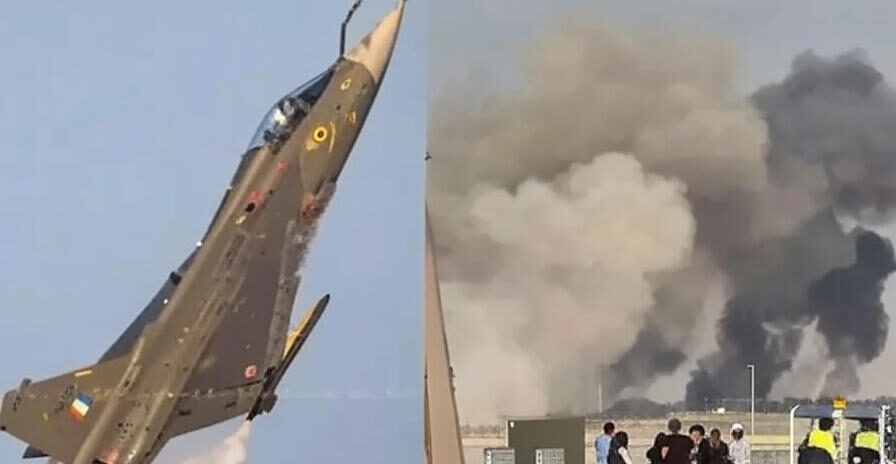
Dubai’s Government Media Office was quick to respond, confirming the tragedy in a statement on X: “A Tejas fighter aircraft from India participating in today’s flying display at the Dubai Airshow has crashed, resulting in the tragic death of the pilot. Firefighting and emergency teams responded rapidly to the incident and are currently managing the situation on-site.” Videos shared across social media captured the chaos: charred debris scattered across the runway, emergency crews hosing down the wreckage, and a stunned crowd being evacuated to safety.
A Hero Remembered: Wing Commander Namansh Syal’s Ultimate Sacrifice
The pilot at the controls was identified as Wing Commander Namansh Syal, a 37-year-old decorated officer from Patlikhoh village in Himachal Pradesh’s Kangra district. Hailing from a family with deep military roots—his father, Jagarnath Syal, is a local resident—Syal was a veteran of multiple squadrons and embodied the IAF’s motto of “Touch the Sky with Glory.” Tributes poured in from across India and beyond, with Prime Minister Narendra Modi, Defense Minister Rajnath Singh, and Chief of Defence Staff General Anil Chauhan expressing profound grief.
“We deeply regret the incident in which an IAF Tejas aircraft met with an accident during an aerial display at Dubai Air Show today. The pilot sustained fatal injuries in the accident. IAF stands firmly with the bereaved family in this time of grief,” the IAF stated on X, announcing a Court of Inquiry to probe the crash. Himachal Pradesh Chief Minister Sukhvinder Singh Sukhu called Syal a “brave and dedicated pilot,” vowing state honors for his funeral. Opposition leader Rahul Gandhi echoed the sentiment, posting: “Deeply saddened by the loss of our brave IAF pilot.”
Syal’s death marks the first fatality in the Tejas program, which has seen only one prior crash in May 2024 in Rajasthan, where the pilot ejected safely. With just 30 Tejas jets in active service since 2016, the aircraft’s safety record has largely been stellar, logging over 1,954 flight hours.
The Tejas Legacy: Symbol of India’s Aerospace Ambitions
Developed by state-run Hindustan Aeronautics Limited (HAL) under the Light Combat Aircraft program initiated in the 1980s, the Tejas represents a cornerstone of India’s “Atmanirbhar Bharat” (Self-Reliant India) initiative. This lightweight, multi-role fighter, powered by a General Electric F404 engine, was designed to replace aging MiG-21s and bolster India’s defenses amid rising tensions with China and Pakistan. The IAF has ordered 97 more units, with plans for nearly 220 Tejas and advanced Mk-1A variants over the next decade.
The jet’s presence at the Dubai Airshow was no accident—it was a high-profile showcase of India’s growing aerospace prowess, following displays by the Suryakiran Aerobatic Team earlier that day in a nod to India-UAE ties. Despite past delays and design tweaks (including a rejected naval variant for being overweight), the Tejas has proven its mettle in exercises and operations, earning praise for its maneuverability.
Yet, this crash has reignited debates on the challenges of indigenous development. Experts like retired Air Marshal Sanjeev Kapoor note the Tejas’s delta-wing configuration excels at high speeds but can “bleed energy” during low-speed turns, potentially a factor here. Social media buzzed with a mix of condolences and unfortunate mockery, including from some Pakistani accounts gloating over the incident—prompting sharp rebuttals highlighting the Tejas’s superior safety stats compared to rivals like the JF-17.
Swift Response and Road to Answers
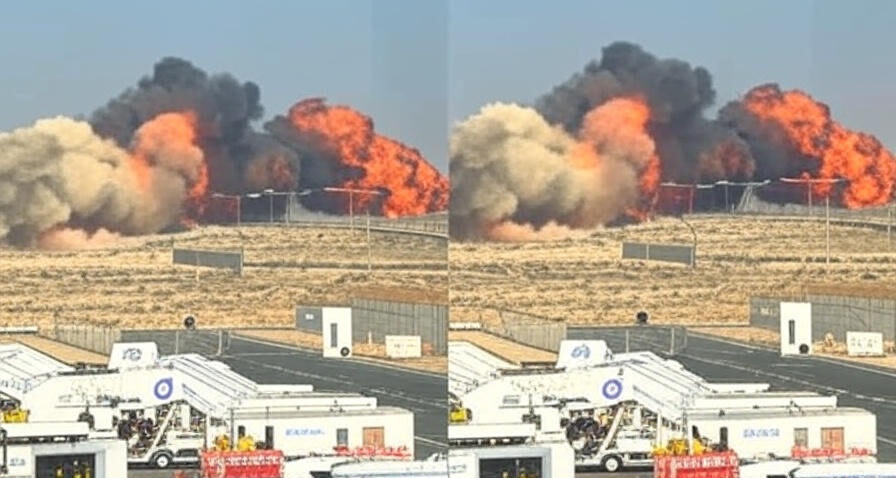
Emergency teams contained the fire within minutes, and air operations resumed less than two hours later, allowing the show to conclude with a subdued aerobatic finale by the UAE’s Al Fursan team. No spectators were injured, thanks to the crash site’s remote location near a rubble area adjacent to residential zones like Emaar South.
The IAF’s Court of Inquiry, involving experts from HAL and international observers, will scrutinize flight data recorders, maintenance logs, and video footage. Preliminary theories point to possible aerodynamic stall during the maneuver, but officials urge restraint until facts emerge.
A Nation Mourns, But Presses On
As the sun set over Dubai’s skies on November 21, 2025, the aviation world paused to honor Wing Commander Syal—a man who lived for the thrill of flight and gave his all for his nation. His sacrifice underscores the perilous edge where innovation meets valor. For India, the Tejas program endures not as a symbol of setback, but of resilience. With ongoing upgrades and a robust production pipeline, the jet’s story is far from over.
Our thoughts remain with Syal’s family, comrades, and the IAF. In the words of a grieving colleague on X: “Wg Cdr Namansh Syal of 3 Squadron immortalised himself… RIP Sir.” The inquiry’s findings will guide safer skies ahead, ensuring no more brilliance is lost to the flames.

 jamesseo