ULA Rocket Failure Amazon Satellites: 7 Shocking & Disaster Facts
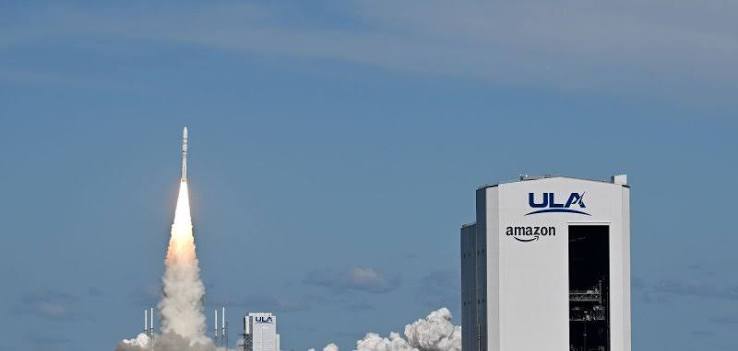
The ULA Rocket Failure Amazon Satellites catastrophe has officially rocked the commercial aerospace and satellite telecommunications industries. United Launch Alliance (ULA)—the heavy-lift launch provider formed as a joint venture between aerospace giants Boeing and Lockheed Martin—suffered a catastrophic mid-flight anomaly during a high-profile launch mission on November 15, 2026. The launch vehicle suffered an upper-stage propulsion failure shortly after stage separation, resulting in the complete destruction of a multi-satellite payload dedicated to building Amazon’s Project Kuiper Low-Earth Orbit (LEO) broadband constellation.
With dozens of multi-million-dollar spacecraft turning into orbital debris and questions mounting regarding launch vehicle reliability, the incident marks a severe setback for Jeff Bezos’s ambition to rival SpaceX’s Starlink network. In this comprehensive, in-depth analysis, we will break down the exact telemetry of the mid-flight failure, the impact on Amazon’s FCC deployment deadlines, insurance liabilities, and what this launch setback means for global and Pakistani satellite communication infrastructure.
Table of Contents
- H1: Inside the ULA Rocket Failure: What Caused the Amazon Satellite Disaster?
- H1: 7 Shocking Facts About the Boeing-Lockheed Joint Venture Launch Catastrophe
- H1: Mission Architecture, Payload Value, and Orbital Insertion Math
- H1: Aerospace Provider Comparison & Reliability Matrix (With Table)
- H1: National Impact: What ULA’s Failure Means for Global Broadband & Pakistan
1. Inside the ULA Rocket Failure: What Caused the Amazon Satellite Disaster?
United Launch Alliance has long prided itself on an immaculate reputation for mission success, executing hundreds of vital national security and commercial launches for NASA, the US Department of Defense, and corporate partners. However, the November 2026 mishap shattered that streak when a flagship launch vehicle experienced an unrecoverable anomaly during upper-stage burn.
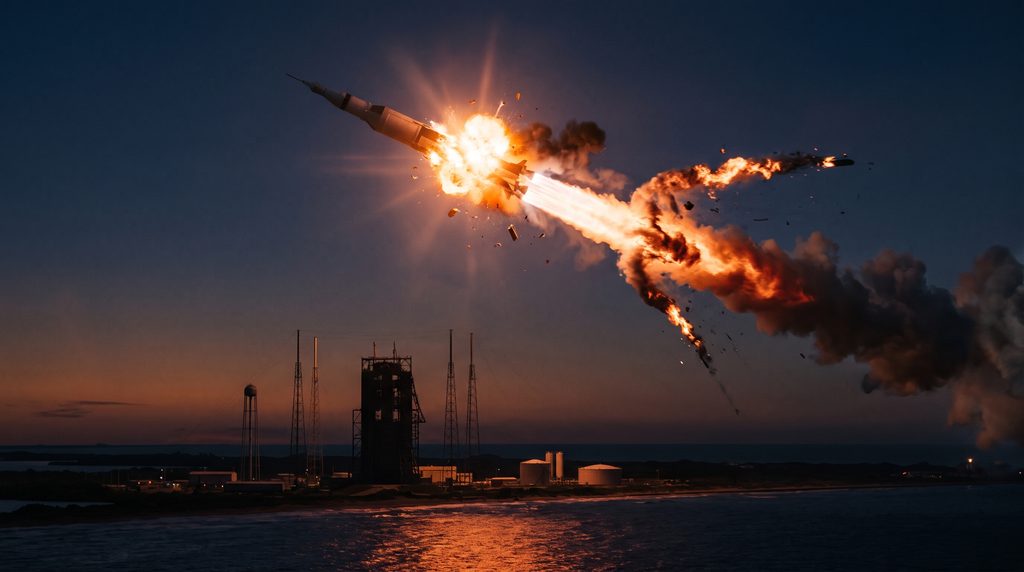
According to preliminary incident reports released by ULA and independent flight tracking telemetry analyzed by aerospace engineers, the first-stage booster performed nominally, executing clean separation. However, seconds after secondary ignition on the upper stage, an unexpected pressure drop and thermal spike compromised structural integrity, forcing range safety controllers to terminate the flight. The falling debris scattered harmlessly into designated ocean safety zones, but the entire payload of Amazon Project Kuiper satellites was instantly lost.
To see how rival launch providers are revolutionizing rocket recovery and lowering flight risks, read our breaking report on the SpaceX Starship Upper Stage Catch (Internal Link).
2. 7 Shocking Facts About the Boeing-Lockheed Joint Venture Launch Catastrophe
The ULA Rocket Failure Amazon Satellites incident carries profound consequences for corporate aerospace contracts, regulatory compliance, and orbital logistics. Here are the seven most shocking facts surrounding the disaster.
1. Complete Destruction of Amazon Project Kuiper Satellites
The entire batch of advanced communication satellites—designed to test inter-satellite optical laser links and consumer phased-array antennas for Amazon’s $$10\text{ billion}+$ Project Kuiper constellation—was completely vaporized during the mid-flight breakup.
2. The Boeing-Lockheed Joint Venture Under Intense Scrutiny
As a combined entity of aerospace titans Boeing and Lockheed Martin, ULA faces severe questions from commercial customers and congressional oversight committees regarding manufacturing quality control and pre-flight testing protocols.
3. Threat to FCC Orbital Deployment Deadlines
Under Federal Communications Commission (FCC) licensing rules, Amazon is legally required to launch and operate half of its planned $3,232$-satellite constellation by mid-2026/2027. Losing a full batch of spacecraft directly threatens Amazon’s regulatory compliance timeline.
4. Massive Financial & Insurance Write-Downs
With each heavy-lift launch costing upwards of $$100\text{ million}$ to $$200\text{ million}$—plus the tens of millions invested in manufacturing the satellites—total insured losses from the disaster exceed half a billion dollars, triggering a massive insurance claim payout.
5. Grounding of Launch Manifest Pending Investigation
Following standard FAA commercial space mishap procedures, ULA’s entire active launch manifest has been temporarily grounded while an independent Mishap Investigation Board (MIB) determines the exact root cause of the upper-stage failure.
6. Ripple Effects on National Security Payloads
Beyond commercial internet satellites, ULA holds billions of dollars in backlog contracts for the US Space Force and National Reconnaissance Office (NRO). Defense officials are hastily reviewing upcoming national security payloads to determine schedule impacts.
7. Competitor Advantage for SpaceX and New Entrants
With ULA temporarily grounded, Amazon may be forced to rely even more heavily on competing launch providers—including SpaceX, Blue Origin, and United Launch Alliance’s rivals—to keep Project Kuiper on schedule.

3. Mission Architecture, Payload Value, and Orbital Insertion Math
To evaluate the operational impact of the ULA Rocket Failure Amazon Satellites disaster, aerospace mission planners rely on the Payload Mass-to-Orbit Ratio ($R_{\text{payload}}$) and Mission Success Probability ($P_{\text{mission}}$) equations:
$$R_{\text{payload}} = \frac{M_{\text{satellites}}}{M_{\text{wet_liftoff}} – M_{\text{dry_structure}}}, \qquad \text{Risk}{\text{total}} = 1 – \prod{i=1}^{N} P_{\text{subsystem}, i}$$
When an upper-stage propulsion subsystem fails mid-flight, the failure probability multiplier ($\prod P_{\text{subsystem}}$) collapses the entire mission value to zero. In heavy-lift commercial rocketry, maintaining a stringently high reliability record ($>98%$) is the only way to retain multi-billion-dollar corporate trust.
To examine how other aerospace systems manage deep-space reliability and life support, read our technical guide on Space Exploration Technologies (Internal Link).
4. Aerospace Provider Comparison & Reliability Matrix
How does ULA’s current setback compare against other major global launch providers operating in late 2026? Review the aerospace reliability and reusability comparison table below.
| Launch Provider & Joint Venture | Flagship Launch Vehicle | Primary Ownership | Reusability Status | Recent Reliability & Mishap History | Primary Commercial Customer Base |
|---|---|---|---|---|---|
| United Launch Alliance (ULA) | Vulcan Centaur / Atlas V | Boeing & Lockheed Martin | Expendable (Traditional) | Upper-stage mid-flight failure (Nov 2026) | US Space Force, Amazon Kuiper, NASA |
| SpaceX | Falcon 9 / Falcon Heavy / Starship | Private (Elon Musk) | 100% Booster & Ship Reusable | High cadence, rare anomalies | Starlink, NASA, Commercial Payloads |
| Blue Origin | New Glenn / New Shepard | Private (Jeff Bezos) | Partially Reusable (Booster) | Scaling manifest, expanding cadence | Project Kuiper, NASA, Commercial |
| Arianespace | Ariane 6 | European Consortium (Airbus/Safran) | Expendable | Stable European institutional flights | European Space Agency (ESA), Galileo |
| CALT / CASC | Long March Series | State-Owned (China) | Expanding Reusability Tests | High frequency domestic and commercial | Chinese National Space Administration |
5. National Impact: What ULA’s Failure Means for Global Broadband & Pakistan
How does a rocket failure in Cape Canaveral or Vandenberg impact telecommunications, software exporters, and satellite internet aspirations in Pakistan?
While Amazon Project Kuiper is primarily designed to compete with Starlink in North American and European consumer markets, global broadband infrastructure is deeply interconnected:
- Global Satellite Manufacturing & Supply Chain: Parts, testing equipment, and engineering software for satellite constellations are built across international supply chains. Delays in deploying Kuiper constellations shift global hardware demand curves.
- Accelerating Multi-Orbit Connectivity: As commercial constellations face launch bottlenecks, Pakistani telecom regulators and enterprises continue relying heavily on geostationary platforms like Satellite Communication Systems (Internal Link) and local fiber networks for reliable connectivity.
- Lessons in Aerospace Quality Assurance: For emerging engineering nations and software hubs in Lahore, Karachi, and Islamabad, high-profile launch failures underscore the unforgiving margin of error inherent in aerospace software verification, telemetry, and automated flight termination systems.

Conclusion: A Soaring Ambition Tempered by Aerospace Reality
The ULA Rocket Failure Amazon Satellites disaster serves as a sobering reminder that spaceflight remains one of humanity’s most difficult technological endeavors. Even with the combined engineering might of Boeing and Lockheed Martin behind United Launch Alliance, gravity and physics grant zero margin for error. As Amazon, ULA, and federal investigators work to uncover the root cause of the upper-stage failure, the commercial aerospace sector must redouble its commitment to engineering rigor as the race to populate Low-Earth Orbit continues.